The Iguana
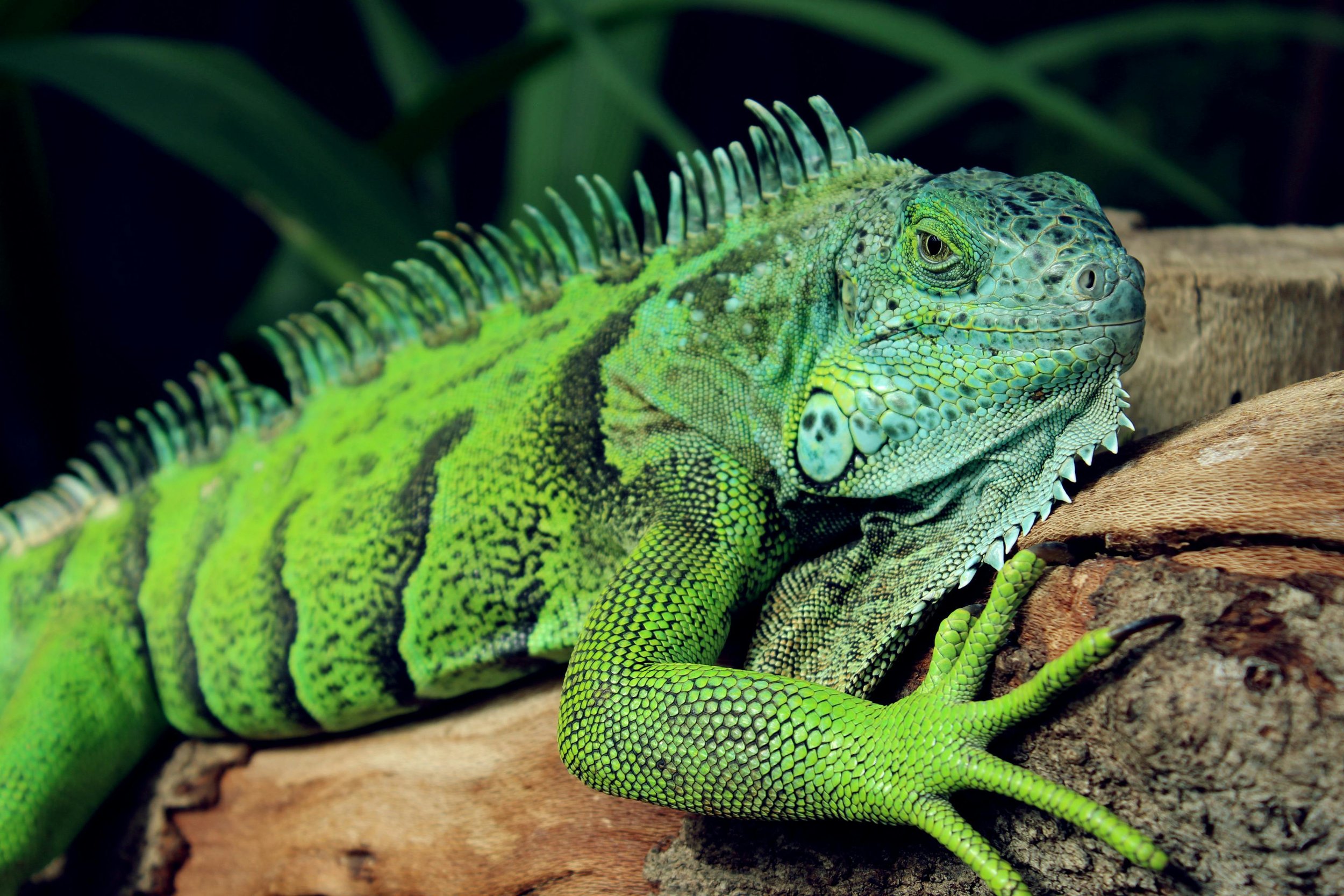
Meet the iguana: Costa Rica's ancient arboreal sunbathers.
Among the most iconic and frequently spotted reptiles gracing our landscapes is the magnificent iguana. These ancient-looking lizards, particularly the ubiquitous Green Iguana (Iguana iguana) and the striking Black Spiny-tailed Iguana (Ctenosaura similis), are a quintessential part of the Tico experience. From their impressive size and distinctive crests to their surprisingly gentle demeanor and vital ecological roles, iguanas are much more than just sunbathers. As your local naturalist guide, I'm thrilled to share a comprehensive look into the lives of these fascinating creatures, revealing where to find them, what makes them tick, and why they are so crucial to Costa Rica's rich biodiversity.
Where to See Iguanas in Costa Rica
Iguanas are found all across the country, and several excellent tours give you the chance to see them in their natural environment.
Top 3 Best Tours to See iguana in Costa Rica
Manuel Antonio National Park: Guided Tour with ENTRANCE INCLUDED (Manuel Antonio National Park)
Tamarindo Estuary: Kayak Monkey Tour (Tamarindo)
Guided tours make it easy to learn more about their habits and increase your chances of seeing them in the wild. If we do not provide the tour ourselves, you will see we have included links to other tour operators that offer sightings. many of these, we have personally been on these tours ourselves and enjoyed them! :)
Frequently Asked Questions about Iguana in Costa Rica
Are iguanas dangerous to humans in Costa Rica?
No, iguanas are generally not dangerous to humans. They are typically shy and will flee if approached too closely. If cornered or threatened, they may whip their tail, hiss, or, as a last resort, bite, but such incidents are rare and usually occur only if people attempt to handle them. It's best to observe them from a respectful distance.
What is the best time of day to see iguanas?
The best time to see iguanas is during the early morning hours, shortly after sunrise, or in the late afternoon. This is when they are most active, basking in the sun to warm up or foraging for food before retreating for the night. Midday can also be good for spotting them high in trees.
Can I feed iguanas in Costa Rica?
It is strongly advised not to feed wild iguanas or any wild animals in Costa Rica. Feeding wild animals can alter their natural behavior, make them dependent on human food, and lead to nutritional imbalances. It also encourages them to approach people, which can lead to conflicts and is detrimental to their welfare.
What do iguanas eat in Costa Rica?
Green Iguanas are primarily herbivorous, feeding on leaves, flowers, and fruits of native plants. Black Spiny-tailed Iguanas are more omnivorous, consuming vegetation but also insects, small vertebrates, and eggs. Their diet is adapted to the abundant plant life and available resources in their Costa Rican habitats.
Where are the best places to see large iguanas?
Large iguanas are commonly seen in many lowland and coastal areas. Manuel Antonio National Park is particularly famous for its numerous and often large Green Iguanas. You'll also find impressive specimens along the rivers of Palo Verde National Park, in the mangroves of Tamarindo, and throughout the Osa Peninsula. Guided tours in these areas often provide the best opportunities.
What's the difference between a Green Iguana and a Black Spiny-tailed Iguana?
The Green Iguana (Iguana iguana) is typically green (though color can vary), larger, has a prominent dewlap, and spends most of its life in trees near water. The Black Spiny-tailed Iguana (Ctenosaura similis) is generally darker (grey to black), smaller, has a distinctly spiny tail, and is more terrestrial, preferring drier, open habitats, and known for its incredible speed.
Are iguanas protected in Costa Rica?
Yes, iguanas are protected under Costa Rican wildlife laws. While they are not considered endangered globally, local populations can face threats. Hunting and capturing iguanas without permits are illegal. Their protection contributes to maintaining the balance of Costa Rica's rich ecosystems and biodiversity.
Why do iguanas "head bob" and "dewlap display"?
Head-bobbing and dewlap displays are key forms of communication for iguanas. Males use these actions to signal their dominance, establish and defend territories, and attract mates during the breeding season. It's a visual language to assert their presence and intentions within their social structure.
1. Basic Identification
Costa Rica is home to several species of iguanas, with the Green Iguana (Iguana iguana) being the most commonly observed. Adults typically reach lengths of 1.2 to 1.7 meters (4 to 5.5 feet), including their long, powerful tails. Their skin color varies from bright emerald green in juveniles to a more muted greyish-green, brown, or even orange (especially during breeding season) in older individuals. Distinctive features include a prominent dewlap under their chin, a row of dorsal spines running down their back, and large, round scales on their cheeks, known as subtympanic shields. The Black Spiny-tailed Iguana (Ctenosaura similis), also common, is typically darker, often black or grey, with a distinctly spiny tail and a more robust build, generally smaller than a fully grown Green Iguana.
2. Distribution within Costa Rica
Iguanas are incredibly widespread throughout Costa Rica, thriving in both Pacific and Caribbean lowlands, extending up into some central valley regions. The Green Iguana prefers areas near water sources, such as rivers, lakes, and coastal mangroves, making them a common sight in places like Tortuguero National Park, Manuel Antonio National Park, and along the canals of the Caño Negro Wildlife Refuge. The Black Spiny-tailed Iguana, on the other hand, is more often found in drier, open habitats, including urban areas, dry forests of Guanacaste (like Santa Rosa National Park), and even on volcanic slopes. Both species are highly adaptable and can be seen in gardens, parks, and even crossing roads, demonstrating their ability to coexist with human development.
3. Conservation Status
The conservation status of iguanas in Costa Rica varies by species. The Green Iguana (Iguana iguana) is currently listed as 'Least Concern' by the IUCN (International Union for Conservation of Nature) across its broad range, including Costa Rica. However, local populations face pressures from habitat loss due to deforestation, particularly in coastal development zones. Poaching for their meat ('gallina de palo' or tree chicken) and eggs, though less prevalent than in some other countries, still occurs in certain regions. The Black Spiny-tailed Iguana (Ctenosaura similis) also holds a 'Least Concern' status. While generally robust, both species are protected within Costa Rica's extensive national park system and through various local conservation initiatives aimed at preserving their habitats.
4. Habitat & Microhabitat in Costa Rica
Green Iguanas are primarily arboreal, meaning they spend most of their lives in trees, often high in the canopy or emergent layers of primary and secondary forests. They show a strong preference for trees overhanging water, providing both an escape route from predators (by dropping into the water) and a source of vegetation. You'll find them lounging on branches along riverbanks, estuaries, and coastal areas. Black Spiny-tailed Iguanas are more terrestrial and rupicolous (rock-dwelling), often found scurrying across open ground, rocky outcrops, and basking on stones or concrete structures, though they can also climb trees. They favor dry forests, savannas, and disturbed areas, making use of tree hollows, burrows, or rock crevices for shelter.
5. Activity Pattern & Daily Life in Costa Rica
Both Green and Black Spiny-tailed Iguanas are strictly diurnal, meaning they are active during the daytime. Their daily routine typically begins with basking in the morning sun to raise their body temperature after the cool night. Once sufficiently warmed, they forage for food, socialize, and defend their territories. As the day progresses and temperatures soar, they may seek shade to prevent overheating. In the late afternoon, they return to their chosen tree or burrow to sleep, often in a high, secure spot where they are less vulnerable to nocturnal predators. Their slow, deliberate movements while basking can make them seem lethargic, but they are capable of surprisingly quick bursts of speed when startled or escaping danger.
6. Diet & Foraging in Costa Rica
Green Iguanas are predominantly herbivorous, with a diet consisting mainly of leaves, flowers, and fruits from a wide variety of plants found in the Costa Rican ecosystem. Young iguanas may occasionally consume insects, but as they mature, their diet becomes almost exclusively vegetarian. They are crucial seed dispersers, inadvertently aiding in forest regeneration by consuming fruits and then depositing viable seeds elsewhere. Black Spiny-tailed Iguanas, while also largely herbivorous, are more omnivorous, especially when young. Their diet includes leaves, fruits, and flowers, but they will also opportunistically consume insects, spiders, small rodents, birds' eggs, and even carrion. This broader diet allows them to thrive in a wider range of habitats, including those with fewer plant resources.
7. Reproduction & Life Cycle in Costa Rica
Iguana mating season in Costa Rica typically occurs during the dry season, from November to March, coinciding with optimal conditions for egg laying. Male Green Iguanas display vibrant orange coloration and engage in head-bobbing rituals and territorial disputes to attract females. After a gestation period, females dig nests, usually in sandy soil or soft earth, and lay clutches of 20 to 70 eggs, often during the late dry season or early rainy season (March to June). The eggs hatch after 65-120 days, depending on temperature. The hatchlings are independent from birth, relying on their instincts for survival. Green iguanas can live up to 15-20 years in the wild. Black Spiny-tailed Iguanas follow a similar reproductive pattern, with females laying clutches of 2 to 25 eggs in underground burrows, typically hatching after about 90 days.
8. Behavior Highlights & Unique Adaptations
Iguanas possess several remarkable adaptations. Their parietal eye, or 'third eye,' on top of their head, is sensitive to changes in light and helps them detect aerial predators. They have excellent vision, crucial for spotting food and threats from high branches. When threatened, Green Iguanas can drop from considerable heights into water below, using their powerful tails to swim away. They also exhibit defensive behaviors like tail-whipping, hissing, and biting if cornered. Black Spiny-tailed Iguanas are renowned for their speed, capable of bursts up to 35 km/h (22 mph), making them one of the fastest lizards. Both species use head-bobbing as a form of communication, signaling territory, dominance, or courtship. They also have specialized kidneys that allow them to excrete excess salt through nasal glands, an adaptation for their often leafy, salt-rich diet.
9. Vocalizations & Communication
Contrary to many reptiles, iguanas are generally not known for complex vocalizations. They are largely silent creatures. However, when highly stressed or cornered, Green Iguanas may emit a distinct hiss as a warning or defensive measure. This hiss is produced by expelling air forcefully. Communication primarily relies on visual cues such as head-bobbing, dewlap displays (flashing their throat fan), body postures, and changes in skin coloration, especially during the breeding season. Males use these visual signals to establish dominance, attract mates, and ward off rivals. Their communication is intricate, even if it lacks auditory complexity.
10. Ecological Role in Costa Rican Ecosystems
Iguanas play a significant ecological role in Costa Rica. As primarily herbivorous animals, Green Iguanas are important primary consumers, helping to control plant growth. More critically, they are effective seed dispersers. By consuming fruits and passing the seeds through their digestive system, they contribute to the germination and spread of various plant species, aiding in forest regeneration and maintaining plant biodiversity. Black Spiny-tailed Iguanas, with their more omnivorous diet, act as both seed dispersers and opportunistic predators, helping to control insect and small rodent populations. Their presence also serves as a food source for larger predators, making them an integral part of the food web and a keystone species in many local ecosystems.
11. Predators & Mortality in Costa Rica
In Costa Rica's rich ecosystem, iguanas face a variety of natural predators. Juveniles are particularly vulnerable to birds of prey like hawks and falcons, snakes, and smaller mammalian predators such as coatis and raccoons. Larger adult iguanas are preyed upon by more formidable predators, including large snakes (like boa constrictors and rattlesnakes), crocodiles and caimans (especially when near water), and raptors like the Ornate Hawk-Eagle. Feral cats and dogs also pose a threat, particularly in areas bordering human settlements. Beyond predation, iguanas face mortality from habitat destruction, road accidents, and, unfortunately, illegal poaching for their meat and eggs, though local conservation efforts aim to mitigate these human-induced threats.
12. Best Places & Tips to See It in Costa Rica
Spotting an iguana in Costa Rica is generally quite easy, as they are among the most commonly observed reptiles. However, knowing where to look enhances your experience. For Green Iguanas, focus on areas with abundant vegetation along rivers, estuaries, and coastlines. Excellent locations include Manuel Antonio National Park, where they frequently bask on trees near the beaches and trails, Tortuguero National Park (along the canals), and the Osa Peninsula (Corcovado National Park, Drake Bay). In Guanacaste, especially around Tamarindo, Papagayo Peninsula, and Palo Verde National Park, you'll often see both Green and Black Spiny-tailed Iguanas. Black Spiny-tailed Iguanas are also prevalent in drier areas and even urban parks in places like San Jose or Liberia. To maximize your chances, consider these tips:
Look Up: They love to bask high in trees.
Near Water: Green Iguanas often prefer branches overhanging rivers or the ocean.
Early Morning/Late Afternoon: These are prime basking times.
Guided Tours are Best: A knowledgeable local guide, especially in places like Manuel Antonio, Corcovado, or a river tour in Palo Verde, will know the specific trees and spots where iguanas regularly perch. They also carry spotting scopes, making it easier to see these masters of camouflage in their natural habitat.
13. Wow, Lesser-Known & Costa Rica-Specific Facts
Color-Changing Masters: While not as dramatic as chameleons, Green Iguanas in Costa Rica can change their skin color to regulate temperature (darker for absorbing heat, lighter for reflecting) and as a social signal, especially males during breeding season turning vivid orange.
Salt Sneezers: Iguanas have specialized glands near their nostrils that allow them to "sneeze out" excess salt, leaving behind white, crusty deposits. This is a common sight and a unique adaptation to their herbivorous diet.
Urban Adaptability: In Costa Rica, Black Spiny-tailed Iguanas have shown remarkable adaptability, thriving in urban and suburban environments, often seen sunning themselves on rooftops, walls, and roadsides, showcasing their resilience.
Tree Chickens: Locally, particularly in more rural areas, iguanas are sometimes referred to as 'gallina de palo' or 'tree chicken' due to their meat historically being a source of protein.
14. Cultural & Historical Importance in Costa Rica
In pre-Columbian Costa Rica, iguanas, particularly the Green Iguana, held some cultural significance for indigenous groups, often featuring in local diets and sometimes in oral traditions. Their presence was indicative of a healthy environment, and they were a valuable food source. In modern Costa Rica, iguanas are a ubiquitous symbol of the country's rich biodiversity and a significant draw for ecotourism. They are a beloved and easily recognizable part of the 'Pura Vida' wildlife experience. While not imbued with deep spiritual significance as some other animals, their consistent presence in national parks, hotels, and even urban landscapes makes them an informal ambassador for Costa Rican wildlife, delighting visitors and reminding locals of the natural beauty surrounding them.
15. Photography & Citizen Science
Photographing iguanas in Costa Rica can be highly rewarding. They are often approachable, especially when basking, but always maintain a respectful distance.
Lighting is Key: Early mornings or late afternoons offer softer, warmer light.
Telephoto Lens: Essential for capturing detail from a distance, especially for arboreal individuals.
Patience: Wait for them to move, or for interesting behaviors like head-bobbing.
Background: Try to get a clean background to make your subject stand out.
For citizen science, platforms like iNaturalist are excellent. If you capture a clear photo, upload it with location and date. Your observations contribute valuable data to scientists studying iguana distribution, population health, and behavior in Costa Rica, aiding conservation efforts. Many local guides can also help identify specific individuals or unique behaviors.
16. Sources & Further Reading (Costa Rica focused)
To delve deeper into the world of iguanas in Costa Rica, consider these reliable sources:
IUCN Red List of Threatened Species: For up-to-date conservation status of Iguana iguana and Ctenosaura similis.
Reptiles of Costa Rica by Jay M. Savage: A comprehensive field guide for identification and natural history.
Neotropical Nature: Reputable scientific publications and articles on Central American herpetology.
Costa Rican Ministry of Environment and Energy (MINAE): Local conservation policies and protected area information.
Local Universities & Research Centers: Institutions like the University of Costa Rica often conduct studies on native wildlife.
