The Kinkajou
Kinkajou in Costa Rica: Your Guide to the Rainforest’s Golden Honey Bear
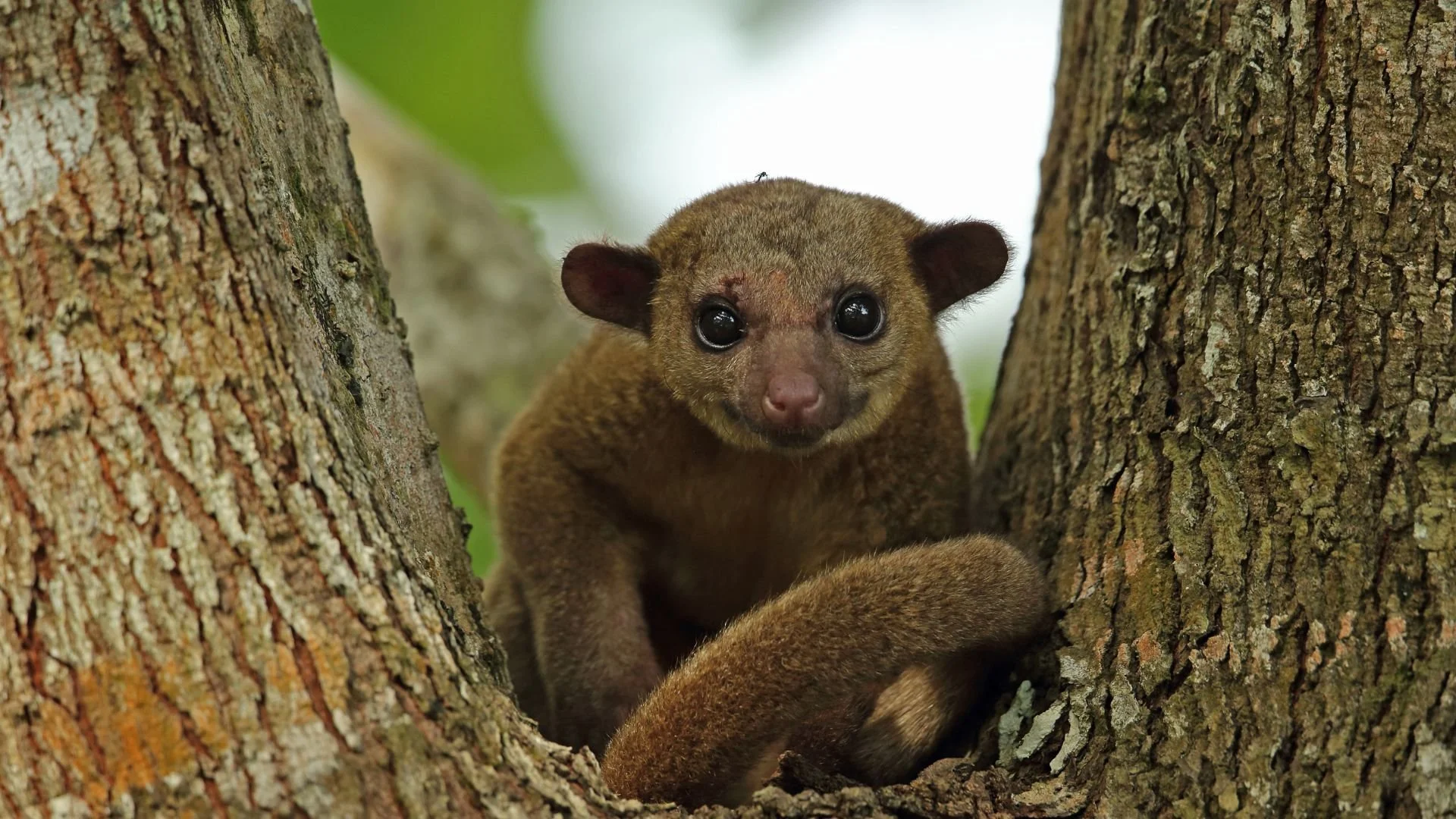
What is a kinkajou, and why is it called a honey bear? The kinkajou (Potos flavus), a nocturnal mammal native to Costa Rica’s rainforests, captivates with its golden fur, big curious eyes, and playful vibe. Locals call it the “martilla” or “honey bear” because of its love for nectar and honey, which it slurps with a long tongue. Part of the raccoon family, this arboreal acrobat moves like a monkey through the canopy, making it a star of Costa Rica’s nighttime wildlife tours. At Rico Tico Tours, we’ve spotted kinkajous on our Wildlife & Nature Tours in Cahuita and Puerto Viejo, delighting families and nature lovers alike.
Quick Facts About the Kinkajou
Scientific Name: Potos flavus
Size: 40-60 cm body, plus a tail of equal length
Weight: 1.5-4.5 kg
Lifespan: Up to 25 years in the wild
Diet: Mainly fruit, nectar, honey; some insects and small vertebrates
Habitat: Costa Rica’s rainforests, cloud forests, coastal lowlands
Conservation Status: Least Concern, but threatened by habitat loss
Where Can You See Kinkajous in Costa Rica?
Kinkajous thrive in Costa Rica’s lush forests, from coastal Cahuita to misty Monteverde. Spotting them requires a night tour with expert guides who know their favorite fruiting trees (like the balsa tree in our wildlife library). Here are top spots to see them:
Cahuita National Park: Coastal rainforests teem with kinkajous. Join our Family Friendly Nature Hike to see them near fig trees in the park, and join us for snorkeling while you’re at it.
Night Reptile Tour: A biodiversity hotspot for nocturnal wildlife. Although it’s a night tour, our guides often catch kinkajous in action.
Monteverde Cloud Forest: Cool, misty forests host thriving populations. Book a Monteverde Night Walk for a chance to see them.
Pro Tip: Look for glowing eyes or listen for soft squeaks. Our local guides use eco-friendly red lights to avoid disturbing them.
What Does a Kinkajou Look Like?
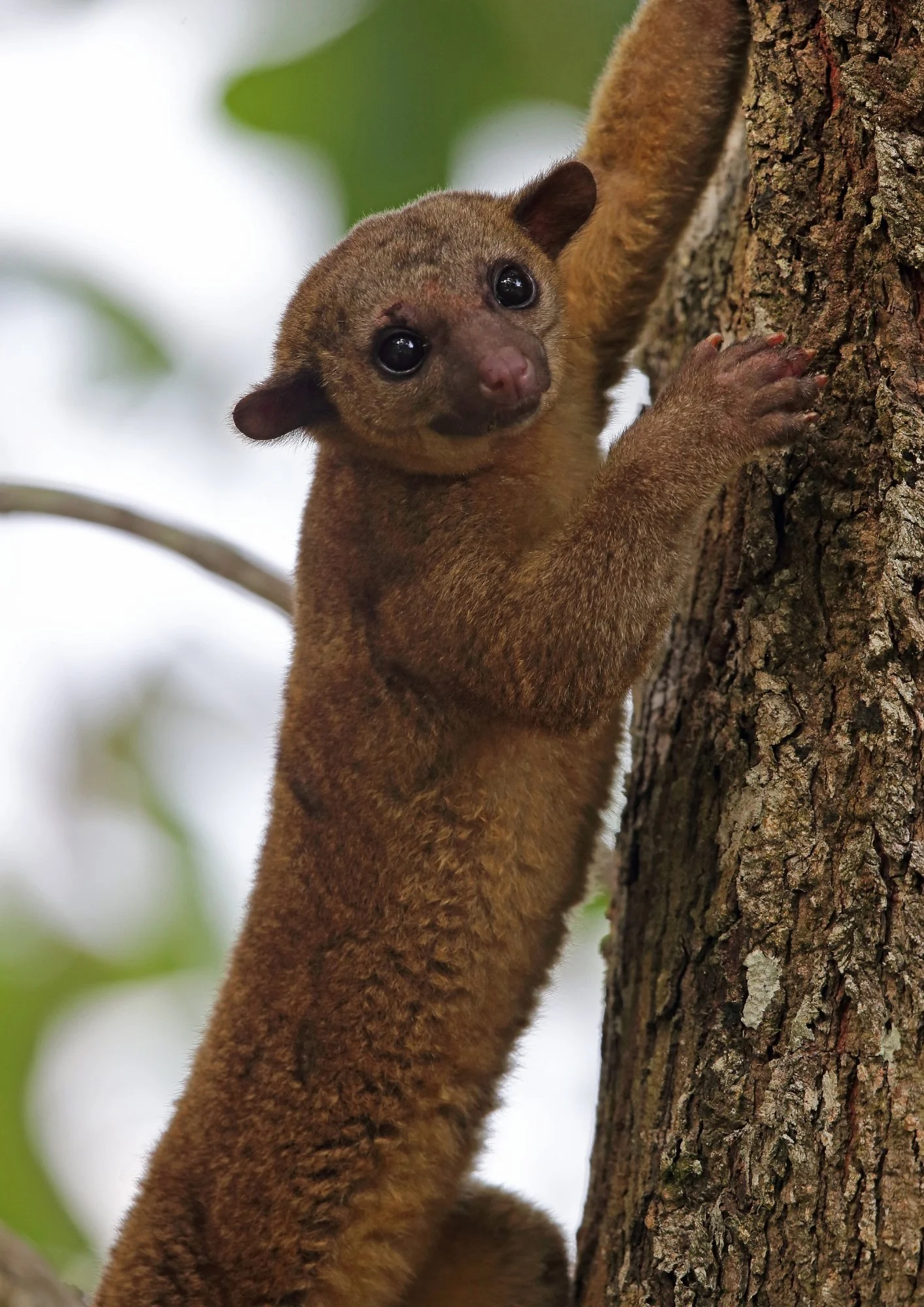
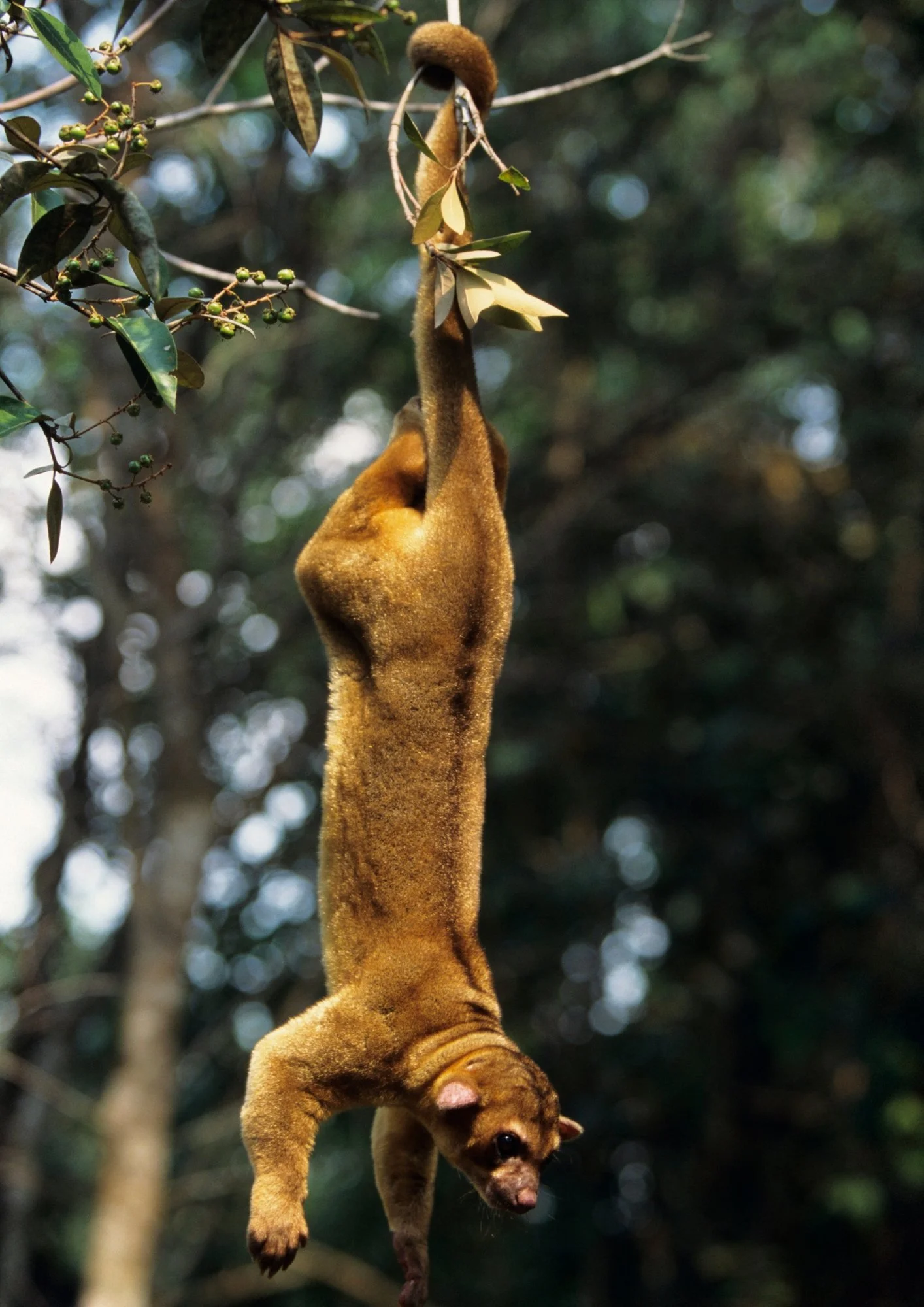
Picture a teddy bear crossed with a monkey. The kinkajou’s golden-brown to reddish-tan fur glows under flashlight beams, and its large, round eyes are built for night vision. Its prehensile tail, curls like a fifth limb and lets it hang upside down while snacking on fruit. At 1.5-4.5 kg, it’s small but mighty, climbing with ease thanks to sharp claws and flexible joints.
What Do Kinkajous Eat, and Why Are They Vital to Rainforests?
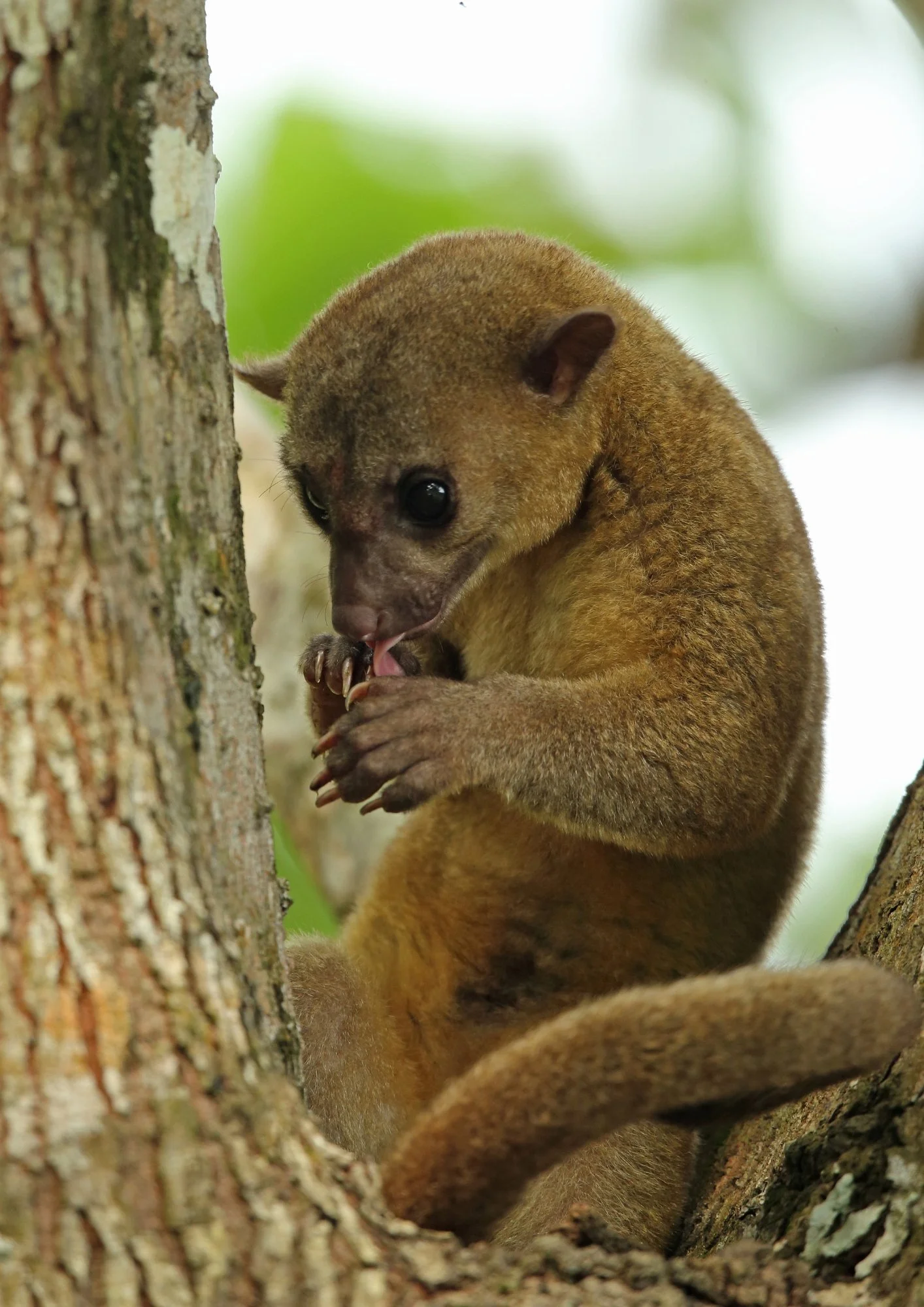
Kinkajous are frugivores, feasting on fruits like figs, bananas, and mangos. Their 13 cm tongue dives into flowers (e.g., heliconia) for nectar or beehives for honey…hence the “honey bear” nickname. They also munch insects and small vertebrates, occasionally.
Ecological Role:
Seed Dispersal: Kinkajous eat fruit, then drop seeds far from the parent tree, helping forests grow.
Pollination: Pollen sticks to their fur as they sip nectar, spreading it to plants like cecropia trees.
This makes them one of the many unsung heroes of Costa Rica’s biodiversity, supporting the same forests you explore on our Wildlife & Nature Tours.
How Do Kinkajous Behave and Communicate?
Kinkajous wake at dusk, emerging from tree hollows or vine nests. They roam up to 2 km nightly, foraging in the canopy with near-silent grace. While mostly solitary, they’re playful when food’s plentiful, gathering in small groups to squeak, whistle, or growl softly. Their calls sound like a mix of bird chirps and cat meows. You can come and listen for them on our Cahuita Night Hike.
They’re curious but shy. If startled, they might let out a high-pitched bark. Fun fact: kinkajous sometimes groom each other, building social bonds, perfect for spotting on our Family Friendly Tours.
How Do Kinkajous Reproduce?
Females give birth to one baby (rarely two) after a 4-month gestation, year-round in Costa Rica’s tropics. Babies cling to mom for months, learning to climb and forage. By one year, they’re independent. Kinkajous live 20-25 years in the wild, sometimes hitting 30 in protected areas.
What Threats Do Kinkajous Face?
Kinkajous aren’t endangered, but they’re not safe either:
Deforestation: Agriculture and development shrink their rainforest homes.
Illegal Pet Trade: Their cute looks tempt poachers, but kinkajous don’t thrive in captivity.
Costa Rica’s laws protect them, and we support ethical wildlife viewing. Book one of our Conservation-Focused Tour to help preserve their habitat.
How Can You Spot a Kinkajou Ethically?
Join a guided tour for the best chance. Our Wildlife & Nature Tours in Cahuita, Puerto Viejo, or Monteverde use trained naturalists who respect wildlife. Avoid flash photography, and stick with operators following Costa Rica’s eco-tourism guidelines.
Related Wildlife: On our tours, you might also see sloths, olingos, or bromeliads that kinkajous pollinate. Check our wildlife library for more.
Why Are Kinkajous Special to Costa Rica?
The kinkajou captures the magic of Costa Rica’s rainforests: graceful, curious, and vital to the ecosystem. Seeing one swing through the canopy under starlight feels like a secret shared by the forest. It’s a reminder of why we prioritize authentic, sustainable experiences.
Ready to Meet a Kinkajou? Book our Cahuita National Park Guided Nature Walks or explore our Family Friendly Adventures to witness Costa Rica’s nocturnal wonders. Got questions? Contact us or dive into our Wildlife Library for more on toucans, orchids, and beyond.
